

Salsa for singles – why you don’t need a partner as a beginner
Many people think they have to have a partner to start salsa, but that's not true! Salsa is a social dance where you change partners and meet new people in a natural way. In this guide, we'll look at why salsa is perfect for singles, how to build confidence, and what to expect at classes and dance nights.
Do I need a partner to start salsa?
Many people think that you have to line up in pairs to start with salsa, but this is a myth that prevents many people from trying their hand at the dance floor. The truth is that you don’t need a permanent partner at all to start – in fact, we want to encourage even those who don’t have a dance partner already to sign up!
In this context, we are talking about singles as in without a dance partner, not necessarily as in romantic status. Many people who are in a relationship have a partner who does not share their interest in dancing, and therefore participate alone in courses. Regardless of your background, it is quite possible to learn salsa on your own.
At most salsa courses, the majority attend alone. The instructors emphasize that “everyone should dance with everyone anyway”, both on courses and social dance evenings. Salsa is a dance built on interaction, variation and inclusion, where you get the opportunity to get to know many different dance partners.
That said, it is often an advantage when you want to continue on a slightly higher level, to find someone to sign up with in pairs, a follower and a driver. But it could be someone you got to know from the beginner class. At a higher level, SalsaNor tries to keep a balance between the driver and the number so that there will be a better flow in the hour. But then, at the beginner level, you just have to sign up with and without a partner.
Salsa is a social dance – and you change partners often
One of the main reasons why you don’t need a permanent dance partner is that salsa is a social and dynamic dance form. On courses, you change partners regularly, often for each new song or after a few minutes, so that everyone gets to dance with everyone. This is a practice that makes learning more effective, fun, and inclusive.
By dancing with different people, you get a number of benefits:
✅ Faster learning – you gain experience with different guidelines and consequences.
✅ Better technique – you learn to adapt to different styles, making you a more versatile dancer.
✅ Increased confidence – dancing with many different people gives confidence and a sense of mastery.
In fact, many instructors recommend partner swapping as a learning strategy, because it helps you develop regardless of who you’re dancing with. If you always practice with one fixed person, you risk getting used to specific habits and small mistakes that don’t necessarily work with other dancers.
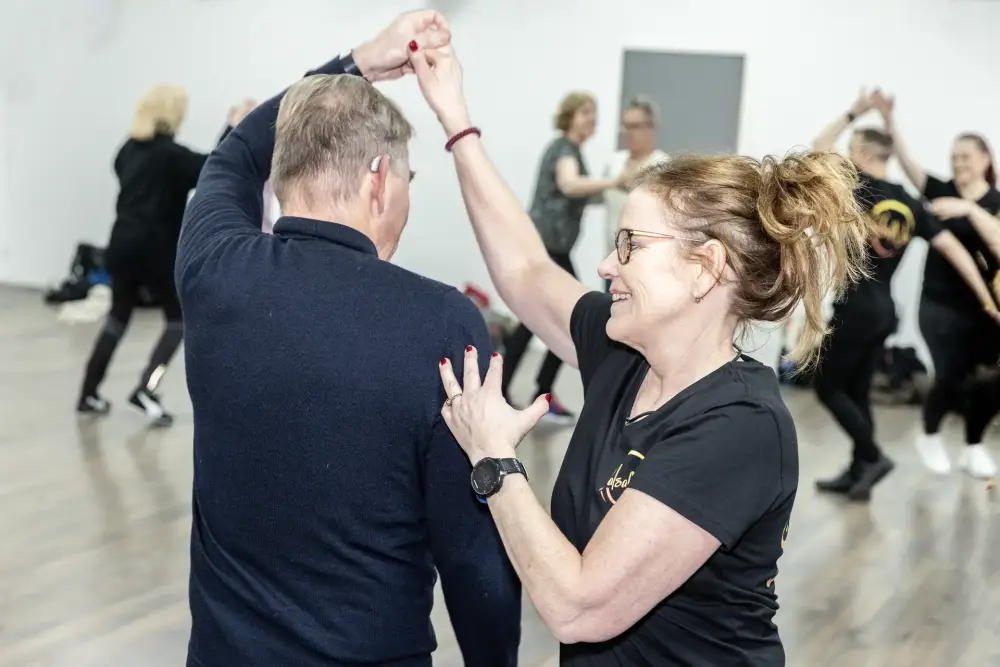
On salsa courses, you change dance partners regularly. Everyone gets to try out different partners during the class.
Salsa is an international dance community
Salsa is much more than just a course once a week – it’s a global dance community. No matter where you live, you will find social events where people gather to dance and have fun somewhere nearby.
Most dance schools arrange social dance evenings, also called “socials”, where everyone is welcome – whether they come alone or in groups. On these nights, it is quite common to change partners for each dance, and you can quickly end up dancing with many different people during one evening.
In addition to the local events, there are major international festivals and congresses, where salsa enthusiasts from all over the world meet. Oslo Caribbean Feeling and SalsaNor Rueda Congress are good examples of events that gather hundreds of dancers for workshops, parties and social dancing late into the night.
These events are known for their inclusive and open atmosphere, where both beginners and experienced dancers can find their place. Many participate without a partner and find that they quickly become part of the community.
Salsa is for everyone, with or without a partner
Salsa is a dance that is based on community, the joy of music and social interaction. No matter if you’re single, in a relationship, or just don’t have a steady dance partner, you’ll always find someone to dance with.
💡 You don’t need a partner to start – you’ll always have someone to dance with!
🔹 On courses, you change partners regularly, and most people sign up alone.
🔹 Social dance nights give you the opportunity to dance with many different partners.
🔹 Festivals and conventions bring together dancers from all over the world in an inclusive environment.
In short – don’t let the lack of a partner hold you back! Salsa is one of the most social dances you can learn, and the most important thing is to have fun and enjoy the journey. So take the step onto the dance floor – you won’t regret it!
The benefits of dancing salsa as a single
Starting salsa without a regular dance partner has a number of benefits – both socially, mentally and physically. Many people find that it gives a sense of freedom, develops new skills and creates opportunities to meet exciting people. Here are some of the benefits you get by taking the step out on the dance floor alone.
Tips for finding a good dance partner
Although you don’t need a regular dance partner to start with salsa, you may eventually find someone you like to practice extra with or go with on salsa nights. Here are some things to keep in mind when dancing with others.

Find a partner with good chemistry
A good dance partner is not necessarily the most experienced dancer, but one who matches your energy and style. When the chemistry is right, the dance flows better. Choose someone you feel comfortable with, who has a similar goal to you – whether that’s learning, having fun, or improving technically.

Be a good dance partner yourself
Smile, make eye contact and be present in the moment. Salsa is all about interaction, and a good dance partner doesn’t just focus on your own movements, but on creating a good experience for both. A golden rule among dancers is: You look good when you make your partner look good!
Avoid correcting or instructing your partner in the middle of the dance, unless it’s a workout you’ve agreed on in advance. Salsa is about having fun together – not about perfecting everything on the first try.

Patience and respect are key
Everyone has been a beginner once, and the level will vary from person to person. If you’re dancing with someone who struggles with the beat or someone who knows more than you, be patient and adapt to the situation. A good dance partner respects the pace and comfort zone of others, and the pressure to perform should never come before the joy of dancing.
Salsa can be a close dance, but it’s important that both feel comfortable. Respect each other’s boundaries and dance with a positive attitude.

Remember hygiene and comfort
Couple dancing involves physical contact, so it is important to take care of personal hygiene. Make sure you have fresh breath, use deodorant and have clean clothes. Avoid strong perfumes, as many people react to intense scent during dancing.
Wear shoes that provide good support and have a smooth sole – this makes it easier to move smoothly on the floor. Clothing should be comfortable and allow free movement.

Dance with many – and you'll find your match
The more you participate in courses, workshops and social dance evenings, the greater the chance of finding a dance partner you feel extra comfortable with. Be open, dance with many different people and build relationships gradually.
Over time, you will notice who you have good chemistry with, and maybe you will find a person you want to practice extra with. Many dance communities also have Facebook groups or forums where people are looking for dance partners – but the best way to find someone is simply to show up and dance!
💃 In short: Line up with an open mind, be a good dance partner, and enjoy the journey – then you will quickly find both good dance friends and maybe a regular training partner.
Salsa – a social dance for everyone, with or without a partner
Salsa is more than just a dance – it’s a door opener to new experiences, friendships and increased self-confidence. You don’t need a permanent partner to start – in fact, most people come alone, and the dance schools arrange for everyone to dance with everyone.
💃 Salsa gives you more than just dancing skills:
✅ Increased self-confidence – you become more confident in social situations and learn to communicate through movement.
✅ A larger network – you meet new people in a natural way and become part of an inclusive environment.
✅ Better mental and physical health – salsa reduces stress, increases well-being and gives you a fun form of exercise.
Salsa is one of the most social dances you can learn, and the community is known for its openness and warmth. Whether you’re single, in a relationship, or just don’t have a steady dance partner, you’ll always find someone to dance with.
🔹 On courses, you change partners regularly, and most people sign up alone.
🔹 Social dance nights give you the opportunity to dance with many different partners.
🔹 Festivals and conventions bring together dancers from all over the world in an inclusive environment.
The myth that you have to have a partner to dance salsa is hereby debunked. Salsa is about community, sharing the joy of dancing and getting to know new people. Whether your goal is to learn something new, get in shape, overcome shyness, or just have fun one night a week, salsa has something to offer.
So take the step onto the dance floor – chances are you’ll find not only dance partners, but also an entire salsa community along the way. ¡Buen baile! – Good dancing!
FAQ – Frequently asked questions from beginners
Salsa may look complicated, but the basic steps are simple and can be learned in a few weeks. The challenge is to coordinate movements with the music and a partner, but this comes with practice. Most beginners feel safe after 1-2 months, while others take a little more time. The most important thing is that you:
✅ Practice regularly – once a week on courses + a little at home.
✅ Have fun along the way!
Yes! Salsa is for all ages and does not require any special physical form. There are dancers from teenagers to 70-year-olds – and everyone can enjoy dancing equally. Salsa is also a fantastic form of exercise, which improves fitness, balance and coordination in a fun way.
💡 Remember: If you can walk, you can learn to dance salsa!
No, you don’t need a partner to participate! Most beginners come alone, and on courses you change partners several times. This allows you to learn to dance with different people and get to know new people. Many people who start out alone end up with a whole new network of dance friends.
To learn faster, you can:
🎵 Listen to salsa music regularly to get familiar with the rhythm.
🏡 Practice basic steps at home – use a mirror or a film yourself to see your own technique.
💃 Go to a social dance! Many dance schools arrange open dance evenings where you can practice what you have learned.
The more you expose yourself to salsa, the faster you’ll progress!
Did you know that SalsaNor owns a large YouTube channel with hundreds of videos that can be of help? – Check it out
Choose comfortable clothes and shoes that allow freedom of movement:
✅ Clothes: T-shirt, trousers/tights or a loose dress/skirt (preferably with shorts underneath). Avoid tight garments.
✅ Shoes: Wear shoes that fit well and have a smooth or medium-smooth sole. Avoid sneakers with a lot of grip, flip-flops or very high heels.
💡 Tip: Bring a water bottle, extra top/t-shirt if you sweat a lot, and possibly chewing gum or mints for fresh breath.
Then you should contact the dance school or the instructor! They are used to beginners and are happy to answer questions such as:
💬 “What dress code do you have?”
💬 “How many people usually attend the course?”
💬 “Do I need to prepare anything?”
It’s perfectly normal to be a little nervous, but you’ll quickly feel more comfortable when the course starts!
No! Beginner’s courses are designed for people who have never danced before. The instructor will explain everything from scratch, and you will gradually develop a sense of rhythm and coordination. Remember:
✅ Rhythm can be learned with practice!
✅ No one is born a dancer – even the best have started somewhere!
✅ The more you listen to salsa music, the easier it will be to follow the beat.
Yes, absolutely! The vast majority of people feel awkward at first. It is unaccustomed coordination for the body. Think about when you learned to ride a bike: in the beginning, you wobbled and almost tipped over all the time. Eventually, you found the balance. The same thing happens with dance. Give it some time and practice, and “two left feet” will gradually transform into right-and-left working together. Short– The clumsiness passes when the body gets used to the movements. Normal feeling, temporary phase
Not at all! Dancing has no expiration date. The salsa community has people of all ages, from teenagers to retirees. In fact, salsa is incredibly popular among adults precisely because it is social, fun and good exercise. You don’t have to be young and fit – you dance based on your own abilities. You may learn a little slower than a 20-year-old, but you often have better patience and less ego (younger people can quickly become impatient with themselves). Many people who start later in life find immense joy in dancing and just wonder why they didn’t start sooner! As long as your doctor hasn’t said anything special about health that prevents you from dancing, just go for it. Take it at your own pace, listen to your body, and enjoy yourself. Salsa is about the joy of life – and the joy of life has no age.
Yes, the sense of rhythm is something that can be trained! Very few have nobody sense of rhythm; It’s mostly about training. Start with simple exercises such as clapping steadily to music or walking to the beat. Use tools as mentioned above (e.g. rhythm app or metronome) to clarify the beat. After a few weeks of mindful listening, you will notice great improvement. Salsa music may seem complex at first, but once you “crack the code”, the rhythm will fall into place for you. So don’t let a lack of rhythm experience stop you – everyone can learn basic rhythm with a little effort.
This varies from person to person, but in general, you’ll notice a distinct difference after a few months of steady practice. For example, if you attend a weekly course and dance socially from time to time, many people will find that after about 3-6 months you feel less awkward. For some, it takes less time, for others longer – no definitive answer. It depends on how much you practice, your background (if you have played sports or music before, rhythm/coordination can sit easier) and how comfortable you are with making mistakes. A word of advice: don’t focus too much on the clock or calendar. Suddenly one day you discover that “hey, now I danced through an entire song without thinking about my feet!”. Then security has crept in. Remember that dancing is a continuous learning process – even the best learn new things all the time, so you are never “done learning”. But you definitely get more relaxed the more you dance.
Salsa is first and foremost a social arena, not a dating service – but yes, many have met love on the dance floor. When you dance regularly, you will naturally meet someone with whom you get good chemistry. There are countless examples of salsa couples who met as single dancers; Instructors tell of students who started dancing together and ended up dating, getting married, and even having children.
That said, it is a good idea to enter the salsa environment with the main focus on the dance and the social, not just looking for a partner. Most people come to dance and have fun – any romantic sparks arise organically along the way. So yes, salsa may be a great place to meet a potential girlfriend, precisely because you meet so many people in a relaxed setting. But either way, you’ll make new friends and memories into the bargain, so you’ll win no matter what!
Nope! It’s an advantage to practice with different partners, actually. On courses, you often change partners regularly precisely to learn how to adapt to different people. Having a regular partner (perhaps someone you attend courses with regularly) can be nice and safe, but make sure you don’t only dancing with each other. You will develop faster by also dancing with others – some are taller, lower, faster, slower, more experienced, less experienced than you. This teaches you to lead/follow better. That said, if you have a friend or girlfriend who also wants to learn, it can be great to practice together at home between classes. Just don’t be afraid to ask others up to dance on socials even if you have a “go-to” partner. The salsa communities are generally very open and inclusive, and it is common to alternate.
Then you have everything to gain by trying salsa! Many shy people feel comfortable in the dance environment because it provides a natural structure around the social. In courses, you always have a task – learning steps and dancing – which takes the pressure out of having to come up with something to say. You get to know people gradually through a joint activity, without it feeling forced or artificial.
The salsa community is known for being inclusive and beginner-friendly, and instructors are used to many being a little nervous at first. Therefore, great emphasis is placed on creating a safe and fun atmosphere, often with humor and good energy to make the participants relax. After a couple of course evenings, you will probably notice that your shoulders lower, and that it becomes easier to participate in both the dance and the small conversations during the breaks.
Remember that everyone has been a beginner at one time, and in the salsa community, you are quickly welcomed with open arms. People greet you, invite you to dance, and there is a low threshold for having a chat. You don’t have to be outgoing from day one – the most important thing is just to show up. Many introverts find that dancing gives them the social contact they need in a safe environment, and eventually you build social confidence naturally.
So don’t let shyness hold you back – salsa could be just what you need to come out of your shell at your own pace!
Partner swapping is a completely natural part of salsa courses and usually takes place at the instructor’s command. Typically, the dancers stand in a circle or in two rows – one for leaders and one for followers. At regular intervals, the instructor will say, for example, “rotate!”, and everyone moves one place so that they get a new dance partner. This way you have time to dance with several different people during a class, often between 8-10 different partners.
This system means that no one is left without a partner, and everyone gets experience dancing with different people. For beginners, this is a great advantage – you learn faster because you get to try out different dance styles and levels.
On social dance nights, partner swapping takes place even more naturally. Each dance lasts one song, and afterwards you thank for the dance and find a new partner for the next song. It is common etiquette to dance with many different people throughout the evening, instead of sticking to one person.
In fact, switching partners is actively encouraged on socials, as it contributes to a pleasant and inclusive atmosphere. In the salsa community, it is also quite common for both men and women to invite to dance – anyone can ask anyone!
In short, partner swapping is an important part of the social nature of salsa, ensuring that everyone gets to dance a lot, learn more, and get to know new people. 💃🕺
It will to happen, and it’s going just fine! This happens even with experienced dancers from time to time. The secret is: don’t stop in panic. Keep moving, even if only with the basic step, until you get back into the rhythm or remember the next figure. Smile or laugh it off – most partners don’t care much as long as you’re having fun. If you’re a driver and suddenly forget what you were supposed to do: go back to something simple (basic step, a simple right spin that everyone knows, or just dance on-the-spot). If you can’t find where you were in the music, you can nod apologetically and quickly say “I messed up a bit – we’ll take basic”, then your partner will know why you suddenly went to basic. If you follow and lose it: follow the basic steps and keep the rhythm, your partner will usually pick it up and simplify the lead until you are in sync again. Remember that a dance is just a few minutes of your life – it’s allowed to improvise and joke around a bit too. No judges hand out grades on social dance, and the audience around is mostly concerned with themselves. So don’t fear the “catastrophe” – it’s never as bad as you think.
This is a common concern among novice dancers, but thankfully, it’s rarely a problem. On a salsa night, the vast majority of people are there precisely to dance with different partners, and the chance that you will stay seated all evening is very small. Salsa is all about inclusion, and both men and women invite you to dance – it’s quite common for anyone to ask anyone.
That said, don’t just sit and wait for others to take the initiative. Be outreach yourself! If you want to dance, take the plunge and ask someone – the vast majority will answer yes. A good tip is to stand on the edge of the dance floor with an open and welcoming body language. Smile, nod to people and show with your eyes that you are ready for a dance. This sends a clear signal to others that you are available, and you will almost certainly get a partner in no time.
If you should still be seated for a couple of dances, don’t stress. Use the break to breathe, enjoy the music, or watch the other dancers – you can learn a lot from observing. Experienced dancers know that it’s perfectly normal to take a little break from time to time, so don’t look at it as something negative.
Remember that everyone has been new to the environment once, and most salsa people are open and inclusive. If you reach out and ask, “Do you want to dance?”, the answer will usually be yes. And if, against all odds, you should sit for a song or two, see it as a well-deserved breather. No one is left alone all evening in salsa – the environment is built on openness and the joy of dancing!
Solo practice is actually very valuable. You can practice Shine-Moves (solo footwork) in front of the mirror to improve style and balance. Practice the basic steps of music, work on body isolation (e.g. hip movements, shoulder rolls) – all of this will make you a better partner dancer too. Invest in a mirrored wall or stand in front of a large mirror (bathroom, hallway) and look at your lines. You can also use a pole on the porch or a door frame as a “partner” to practice spinning (hold lightly by the edge and practice spinning under your arm yourself). If you have an elastic/exercise band, you can attach it to something and practice the lead/pull movement with your arm as the handler would do. Creative, but it works! In addition, you can visualize – stand on the floor and feign You have a partner: Lead yourself through a character you’ve learned (if you’re a follower, try going through the follow pattern on your own). It may look strange, but it helps the brain repeat the patterns. And last but not least: make use of music and videos. All of this will make you feel more prepared the next time you dance with a real partner.
Try practicing with music at home, count the beat out loud, and focus on the rhythm rather than each individual step. Let your music control your movements. Listen to music a lot.
Practice regularly, so that you build up muscle memory. Use a mirror to check your posture, but lift your gaze to maintain balance. Over time, you’ll feel more natural on the dance floor.
Before dancing, take a few deep breaths and relax your upper body. Think about letting an invisible thread lift your head. Also practice isolation exercises at home to get better control of your shoulders and upper body.
Are you ready for your first course?
We hope this guide has given you useful tips for beginners! Salsa is a fantastic way to have fun, stay active, and meet new people. So what are you waiting for? Sign up for your first course today! 💃🎶
