


How to find the rhythm – even if you’ve never danced before
Discover simple exercises and tips for listening for the beat of salsa, counting the beats and using the music to guide the movements. Perfect for those who are completely new to salsa!
Finding the beat of a salsa song can seem challenging, especially for those who have never danced before. The rhythms in salsa are different from those in pop and rock – they are richer, more layered and often syncopated. But don’t despair: it Is it possible to find the rhythm in salsa with some simple techniques. In this guide, you will get a brief introduction to the rhythmic basis of salsa and concrete tips on how to Learn salsa rhythm, practice rhythm and become confident on the dance floor.
Why is it important to understand the music?
Salsa is an energetic dance that is closely linked to the music it is danced to. The rhythm and melody indicate not only the tempo, but also the mood and feeling of the dance. When you learn to listen actively, you become more present in the dance, and you will be able to follow your partner more easily – or lead your partner yourself, if you dance as a leader. For beginners, this is often the biggest hurdle: finding the beat in the music and knowing when to take the plunge.
The rhythmic roots of salsa: clef and percussion
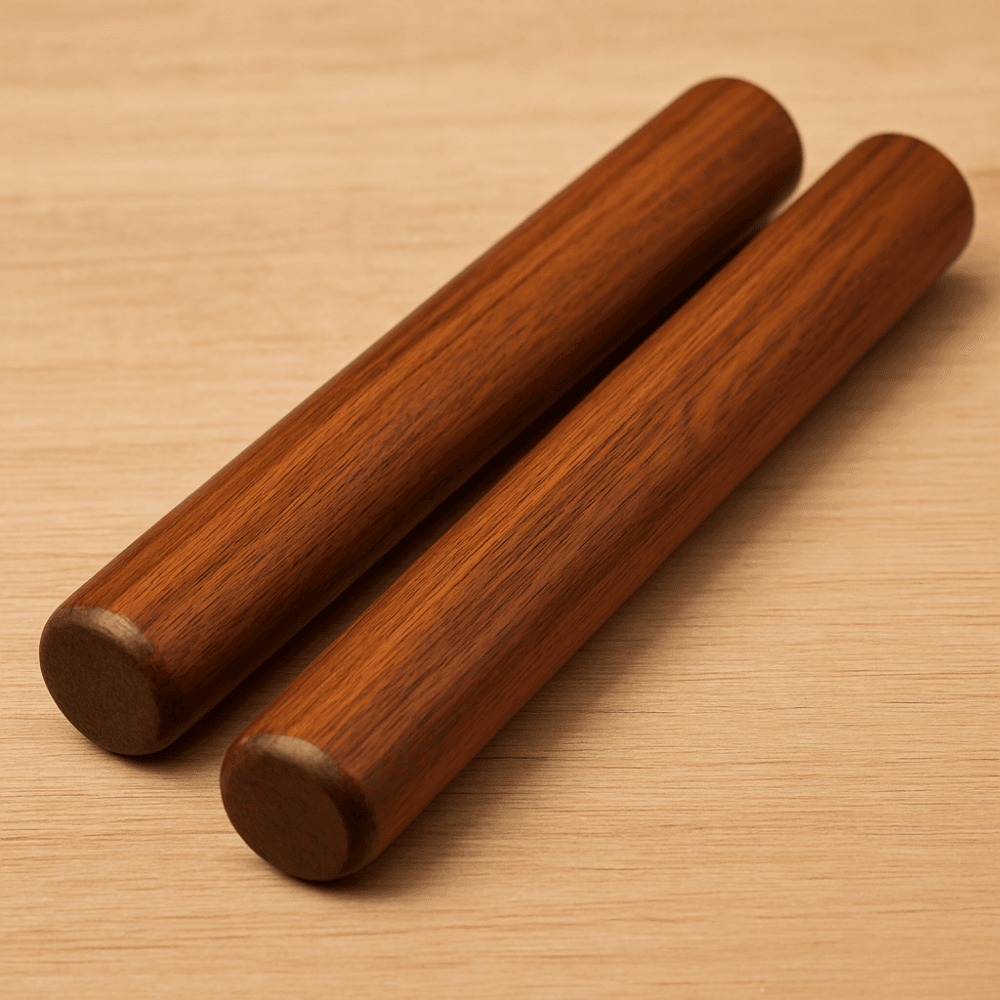
Salsa music has deep Afro-Cuban roots. The core of the rhythm structure is the clef – a five-kind rhythm pattern that is considered the very “glue” of the music. The word clave means “key” in Spanish, and it fits well: the clave rhythm acts as a key or pillar that holds the rest of the instruments together. This pattern originated in West African music traditions and came to the Caribbean with the slave trade, where it still has the same function in today’s salsa. The clave is traditionally played on two wooden sticks (claves), but is present in the music whether it is heard clearly or not.
Around the collar, the percussion is built up in layers:
conga drums:
Bongos:
Timbales:
cowbell:
Each of these instruments has its own repetitive patterns (ostinates) that fit into the piano. For example, the basic conga drum pattern (tumbao) is played with beats on the off-beat (“and beats” / 1″ and “2” and “3…”) in the beat, so that one of the conga’s notes (called ponche) coincides exactly with the third beat of the clave. This creates an interplay where all rhythms coincide with the piano and complement each other:
The result for us as dancers is a rich but steady pulse we can relate to – a bit like an orchestra where all the instruments march in the same beat, only with different steps and accents.
Historically, the rhythmic structure of salsa was further developed outside of Cuba as well. In the 1940s in New York, Cuban-born Mario Bauzá formalized the concept of 3-2 and 2-3 clefts – two ways in which the clave rhythm can “settle” over two beats. This laid the foundation for various salsa styles. Today, you hear terms such as “dance on 1” (a tiempo) versus “dance on 2” (contratiempo), which refers to whether you start the dance on the first or second beat of the bar. Cuban salsa (Casino) is usually danced a tiempo (on 1), while New York and Puerto Rican style are often danced contratiempo (on 2). Regardless of the style, one must understand the same underlying 4/4 bar with 8 counting beats (1-2-3-4-5-6-7-8) that is repeated continuously. The structure of the music directly affects the dance: Salsa dancers usually take steps on 6 of the 8 beats (1-2-3 and 5-6-7) and mark a slight pause or weight change on the remaining two (4 and 8).
It’s this “quick-quick-slow” rhythm – two quick steps, one rest – that gives salsa its characteristic flow. With this background knowledge in mind, let’s look at how you can practically train your ear and body to find the beat.
How to listen for the beat in salsa
The first step to dancing salsa rhythmically is to be able to hear and feel the beat in the music. Here are some exercises and techniques to train your listening skills:
In this video from SalsaNor’s own video platform Rueda.Casino , Mario and Eduardo demonstrate some of the more common rhythms in Cuban music. With a special focus on Tiempo and Contratiempo.

Clap the beat
Play a salsa song and try to clap evenly on each beat. Start simple – don’t worry which beats you clap on (1, 2, 3, etc.), just find a steady pulse. If you manage to clap steadily to the beat of the music, you’ve found the basic beat. This teaches your ear to recognize the pace. Eventually, you can try to Increase the volume of the music and still hear your own claps, so you’ll notice if you’re really following the beat or slipping out.

Count aloud as you listen
The next step is to count the beat In salsa, as mentioned, we count eight-note pulse in groups of eight: “1-2-3-4-5-6-7-8”, where 1 and 5 often feel like heavier impacts. Try to count like this to the music. You will notice that 4 and 8 often feel like natural breaks “These are the same breaks you will later have in the dance. By counting the rhythm, you understand the structure of the music better. After some practice, you can focus on marking the number “1” Extra clear to yourself every time you come around to the start of a new eight. This helps you recognize The first beat of the music phrase, which is important to know when to start the dance.

Listen for clear instruments:
In salsa music, there are often some instruments that mark the beat clearer than others. An example is cowbell, which usually enters the intense parts of the song – it typically beats on every heavy beats (often at 1, 3, 5, 7 in time) and works almost like a metronome. Try to identify the sound of the cowbell and clap along with it.
The clave (two wooden sticks) can also be audible; it plays its five-beat pattern that complements the rhythm, but this can be a bit tricky to follow for beginners since the beats are syncopated.
Furthermore, you can listen to the conga drum: The conga has a pattern where you often hear a distinct slap (slap) – this often happens in other ways beats in each bar (e.g. counts 2 and 6 in the eight-count) and a deeper tone around 4 and 8. If you hear this “slap”, you know that 1-The blow came just before. Focusing on one instrument at a time – whether it’s bass, piano, conga or cowbell – can help your ear filter out the complex soundscape and find your pulse.

Find the impact in your music
The impact refers to the heavy first beat of the bar (beat 1). An exercise to practice this is to listen for when musicians Starting a new pattern or phrase, because often these start on 1. Notice vocalists: the singer starts a new line of lyrics, or shouts a “¡Azúcar!” ala Celia Cruz, it is often placed on a 1 to match the phrasing of the music. Similarly, a horn sequence or piano riff will often be repeated over 2×4 beats and come back to the start of 1 again. Try to Know When the music “lands” or “restarts” – that’s usually where 1 is. Practice by counting through the song and see if you can point out where in the song you think beat one falls; After a few bars you will either confirm that you are correct (the music harmonizes with your count) or you will have to adjust yourself one or two beats forward/backward.

Develop musical acumen through active listening
The more you listen to salsa, the more natural the rhythm will feel. Set aside time to just listen without dancing. Concentrate on the rhythm section – maybe even turn down the treble on the system to accentuate the drums and bass. You can also vary what you listen for each time: one day you focus only on the drums, the next day only on vocal phrase and chorus, etc. Eventually, your brain will start predicting rhythm patterns. It’s all about Turn your ear to the pulse of salsa. Think of it as language training: at first, everything sounds foreign, but repeated exposure allows you to pick up on familiar “words” (rhythms) in the soundscape.
Simple exercises to find the rhythm
In addition to listening, it’s important to practice physically moving to the beat. Here are some simple exercises you can do alone or with a friend to improve the sense of rhythm in your body:
March in place in time
A very basic exercise is to go to the place of the music. Put on a salsa train and march with knee lifts as if you were walking, putting down each footstep on a beat. Keep your upper body calm and focus only on the feet that are walking “left, right, left, right…” to the beat of the music. This exercise trains you to associate what you hear (the beat) with what you do (steps).
Once you get comfortable hitting each shot, try omitting the step of 4 and 8 (just let your foot touch the ground without weight) while continuing to go on the other beats – then you’re already mimicking the basic rhythm of salsa (quick-quick-slow).
Practice basic steps with counting
The basic steps of salsa (basic step) usually involves three steps and one break per beat period. For example, in Cuban style (Casino), you often walk side to side or back-and-forth with the same 1-2-3, 5-6-7 rhythm. Practice this pattern slowly. Count out loud “1-2-3-(4)-5-6-7-(8)” while moving your feet. Think “Quick, quick, slow”: two quick steps, then a little rest (it actually lasts one stroke, but feels like a breather). Repeat again and again until you can do it without having to think about the steps. Start without music first. Then, when you’re ready, put on a calm tune and try to Sync your steps to the beat You hear – 1 should coincide with the first step, 5 with the switch to the other foot. This exercise makes your body start to “automate” the rhythm pattern in terms of dancing.
Change weight from foot to foot:
If the full basic step feels complicated at first, you can start even simpler: stand on the spot and rock the weight from the right to the left foot every other beat. With the music, count 1-2-3-4-5-6-7-8, and emphasize Right foot on 1, left foot on 2, right on 3, left on 4, etc. You really just move the center of gravity side to side in time with the count (your knees can bend slightly to mark the weight shift). You can do this to music or metronome. The exercise is great for feeling the rhythm of the body without having to coordinate full steps. When this is the case, you can increase the challenge by Mark 4 and 8 as breaks (e.g. only touch the toe on the floor instead of full weight). By then, you’ve already started dancing the salsa rhythm with just weight transfers.
Dance with a partner (focus on the music)
If you have the opportunity, practice the basic steps with a partner. Feel free to hold in an open position (two-handed grip) or dance next to each other. Put on a simple salsa and try to Go through Basic-Step together in time. Avoid characters and turns to begin with – just concentrate on being in sync with each other and the music. This helps because you can give each other feedback: if one of you gets out of step, the other will notice. A tip is that the partner who feels most confident in the rhythm Can count high while you dance, so that the other person hears the reference. Dancing with a partner to music in this way trains the balance between to follow the music and to follow each other. It also builds confidence – you get used to keeping the beat in the circumstances you are actually going to use it (in pairs).
Start slowly – gradually increase the pace
The tempo of salsa songs varies from slow and “lubricated” (e.g. Cuban son melodies) to lightning-fast timba or mambo songs. As a beginner, you should start with slow to moderate pace. Feel free to choose a song that is known for a clear rhythm and medium tempo, for example “Micaela” by Sonora Carruseles or “Acid” by Ray Barreto. Dance the basic step to this until you feel it is easy. Then you can try something a little faster. The point is to train endurance in the sense of rhythm. When you master a slightly faster song without falling out of tune, you can challenge yourself with an even faster one. Remember: it’s better to dance safely and to the beat of a calm song than to stumble through an overly fast tune. Some examples of songs with a clear rhythm for beginners include: “Fragilidad” – Milagros Piñera, “Llave” – Grupo Latin Vibe and “Como Me Duele Perderte” – Gloria Estefan, in addition to the aforementioned Barreto and Carruseles song. These have clear musical phrases and a tempo that gives you some room to think. Practice with a selection of songs – it lets you find the rhythm of any song, not just one favorite.
How music helps guide the movements
Video resources for rhythm training
Introduction
In this video, Cuban musicians explain the difference between dancing on 1 versus on 2, and how music and dance are connected. This provides a cultural perspective on Timing and why certain rhythms feel natural
Finding the Rhythm
Here you will find concrete advice for finding the rhythm in the music. The video focuses on listening for characteristic instruments and pulse elements in contratiempo music (salsa of 2). Even if you dance salsa a tiempo as usual, the exercises in the video are very useful – they teach you to distinguish different rhythm tracks in a song and identify the basic elements, which is transferable to all salsa.
Music recommendations
In the video Contratiempo – Sugerencias de música , you also get suggestions for songs that are suitable for practicing timing, especially in Cuban son and salsa. These songs often have a clearer or slower beat that is nice for beginners to practice to.
FAQ – Frequently asked questions from beginners
Try practicing with music at home, count the beat out loud, and focus on the rhythm rather than each individual step. Let your music control your movements. Listen to music a lot.
Practice regularly, so that you build up muscle memory. Use a mirror to check your posture, but lift your gaze to maintain balance. Over time, you’ll feel more natural on the dance floor.
Before dancing, take a few deep breaths and relax your upper body. Think about letting an invisible thread lift your head. Also practice isolation exercises at home to get better control of your shoulders and upper body.
Are you ready for your first course?
We hope this guide has given you useful tips for beginners! Salsa is a fantastic way to have fun, stay active, and meet new people. So what are you waiting for? Sign up for your first course today! 💃🎶
